> ## Documentation Index
> Fetch the complete documentation index at: https://docs.crazygoldfish.com/llms.txt
> Use this file to discover all available pages before exploring further.
# Use Cases by Platform
> Welcome to the CrazyGoldFish's TOEFL Evaluation API documentation. 👋
### Introduction
Welcome to our detailed guide on leveraging TOEFL Evaluation and Generation APIs. This document is crafted for Product Managers, CXOs, and Developers working in Study Abroad companies, tutoring, or test prep platforms focused on English language teaching.
> By integrating our advanced API solutions, you can streamline the TOEFL evaluation process, provide instant personalized feedback, generate high-quality content, and enhance user engagement across all stages of your customer funnel. Implementing these tools will help you increase revenue, reduce operational costs, and improve customer satisfaction.
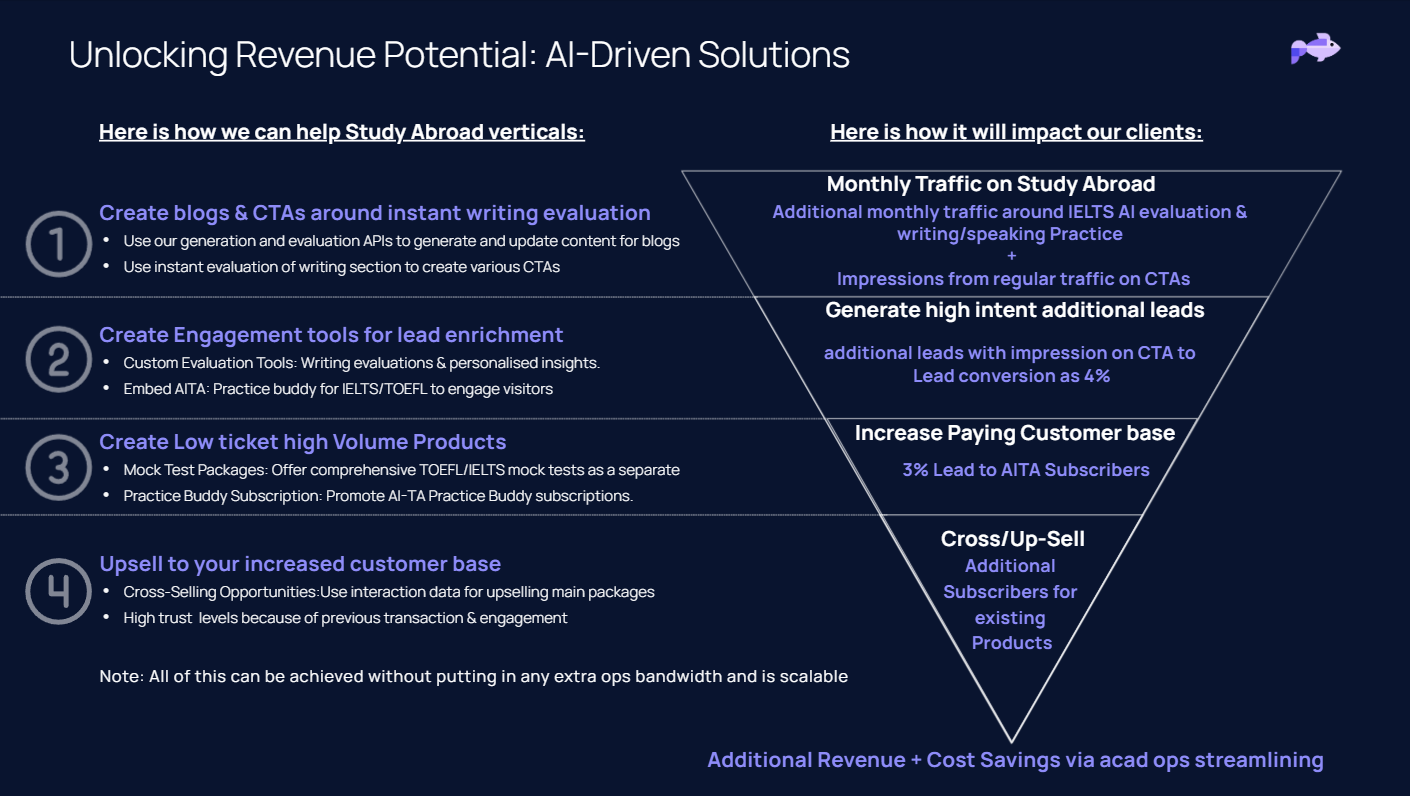 ### 1. Create Blogs & CTAs Around Instant Writing Evaluation
Creating engaging content focused on instant writing evaluation is a powerful way to attract the right audience to your platform. By highlighting the efficiency and accuracy of AI-driven TOEFL evaluations, you can position your platform as a leader in the industry. This strategy not only drives relevant traffic but also enhances your brand's authority in the competitive landscape of English language teaching and test preparation.
**Expected Outcome**: By focusing on instant writing evaluations in your content, you will attract a more targeted audience that is likely to convert into engaged users. This will lead to increased traffic, higher brand authority, and ultimately, more conversions as potential customers see the value in your AI-driven solutions.
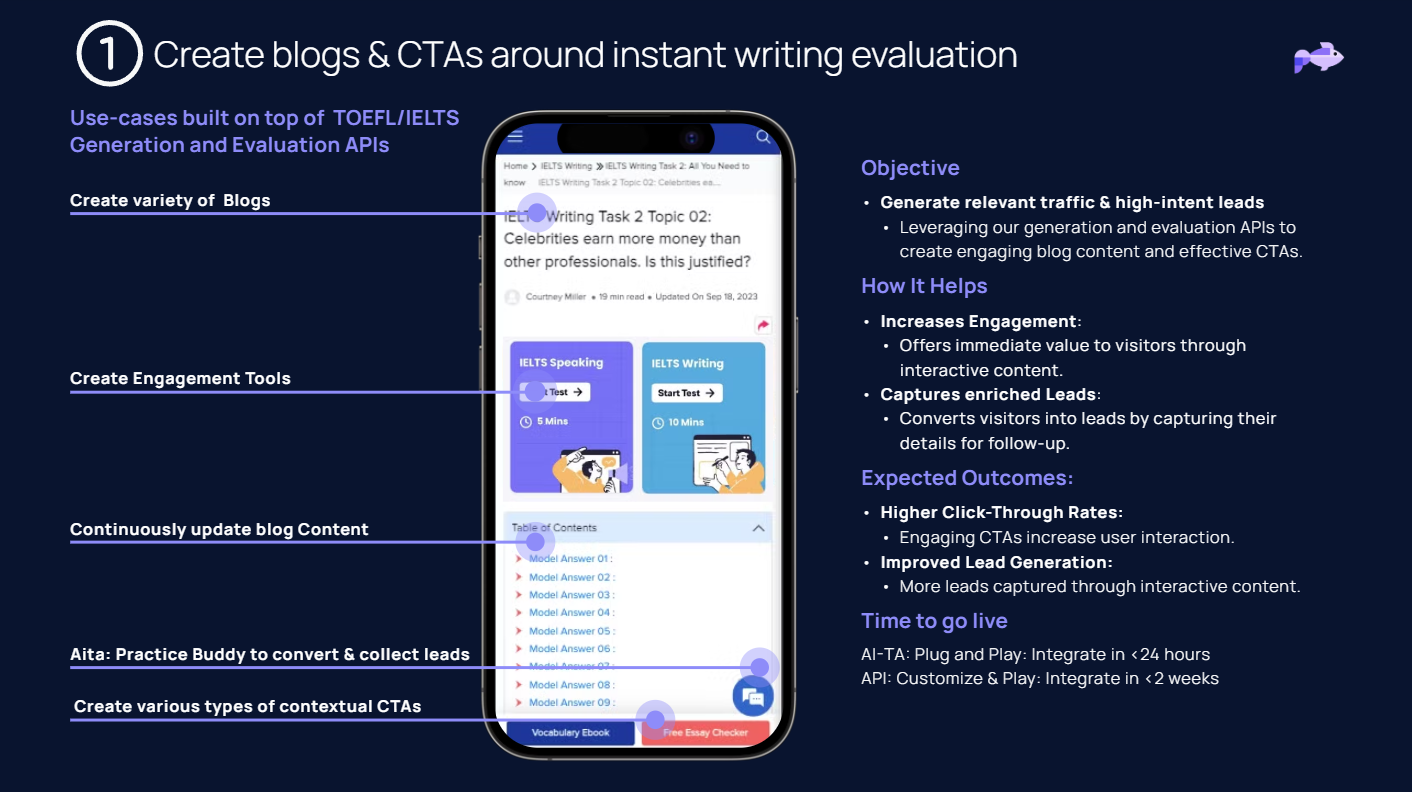
### 1. Create Blogs & CTAs Around Instant Writing Evaluation
Creating engaging content focused on instant writing evaluation is a powerful way to attract the right audience to your platform. By highlighting the efficiency and accuracy of AI-driven TOEFL evaluations, you can position your platform as a leader in the industry. This strategy not only drives relevant traffic but also enhances your brand's authority in the competitive landscape of English language teaching and test preparation.
**Expected Outcome**: By focusing on instant writing evaluations in your content, you will attract a more targeted audience that is likely to convert into engaged users. This will lead to increased traffic, higher brand authority, and ultimately, more conversions as potential customers see the value in your AI-driven solutions.
 [Check Out - Create Blogs & CTAs Around Instant Writing
Evaluation](https://www.crazygoldfish.com/post/1-create-blogs-ctas-around-instant-writing-evaluation)
### 2. Create Engagement Tools for Lead Enrichment
Enriching leads through effective engagement tools is crucial for converting users into loyal customers. AI-driven tools, like the Aita Bot, offer personalized practice tests, real-time feedback, and tailored study plans that not only engage users but also significantly enhance the quality of your leads. This approach ensures that your platform remains top-of-mind for users as they progress through their learning journey.
**Expected Outcome**: Implementing engagement tools for lead enrichment will improve the quality of your leads, resulting in higher conversion rates. Users who engage with these tools are more likely to become loyal customers, leading to increased customer lifetime value and sustained revenue growth.
[Check Out - Create Blogs & CTAs Around Instant Writing
Evaluation](https://www.crazygoldfish.com/post/1-create-blogs-ctas-around-instant-writing-evaluation)
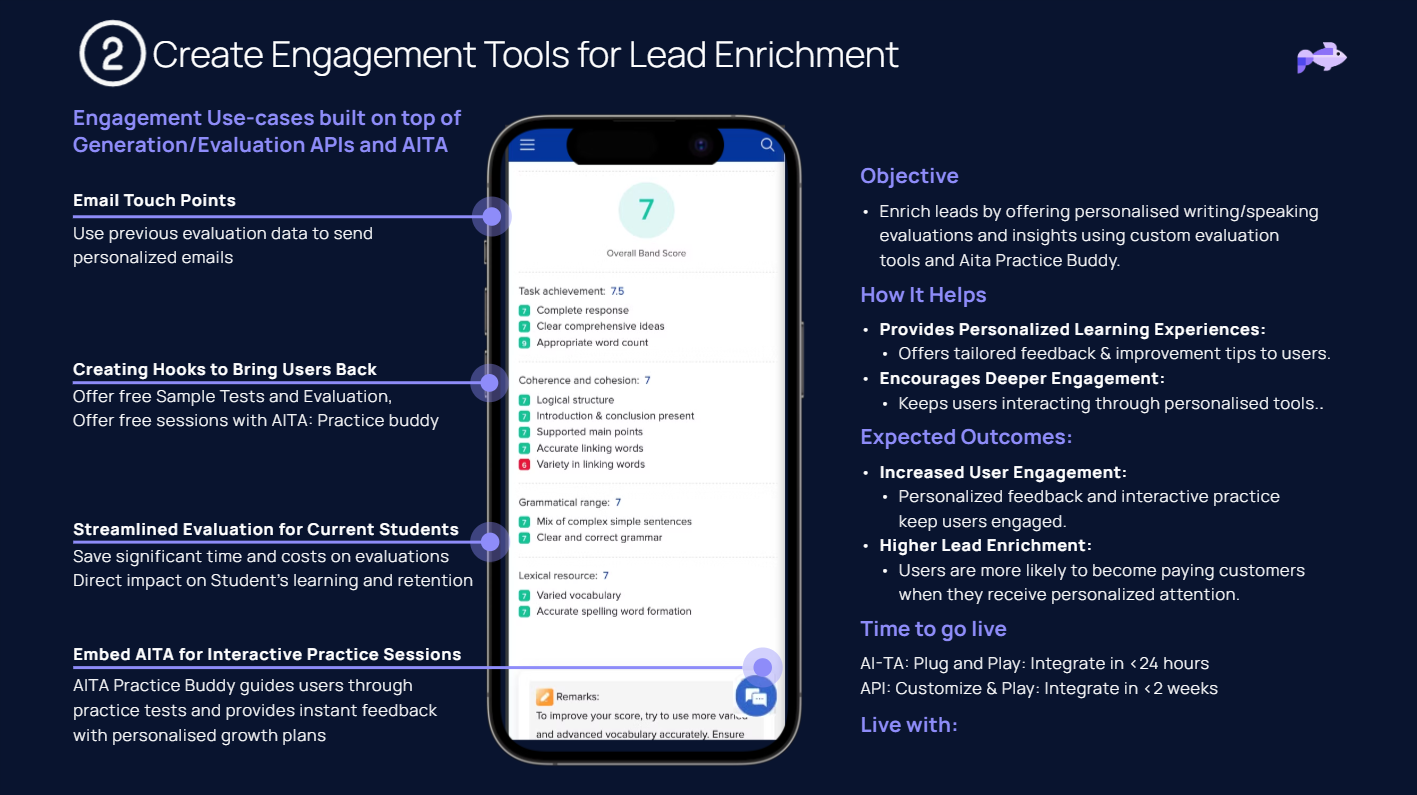
### 2. Create Engagement Tools for Lead Enrichment
Enriching leads through effective engagement tools is crucial for converting users into loyal customers. AI-driven tools, like the Aita Bot, offer personalized practice tests, real-time feedback, and tailored study plans that not only engage users but also significantly enhance the quality of your leads. This approach ensures that your platform remains top-of-mind for users as they progress through their learning journey.
**Expected Outcome**: Implementing engagement tools for lead enrichment will improve the quality of your leads, resulting in higher conversion rates. Users who engage with these tools are more likely to become loyal customers, leading to increased customer lifetime value and sustained revenue growth.
 [Check Out - Create Engagement Tools for Lead
Enrichment](https://www.crazygoldfish.com/post/create-engagement-tools-for-lead-enrichment)
### 3. Create Low Ticket High Volume Products
Offering low-cost, high-volume products allows you to reach a broader audience while maintaining a steady revenue stream. These products are designed to be accessible, providing significant value at an affordable price point, thus attracting a larger customer base. By leveraging our TOEFL APIs, you can deliver high-quality, instantly evaluated products that cater to a wide range of users, enhancing both engagement and satisfaction.
**Expected Outcome**: By offering low-cost, high-volume products, you can significantly expand your customer base, tapping into a broader market segment that values affordability. These accessible products, powered by our TOEFL APIs, will not only drive higher user engagement and satisfaction but also generate a steady and predictable revenue stream. As more users experience the immediate value of these offerings, you can expect increased brand loyalty, higher conversion rates from free to paid services, and an overall boost in long-term customer retention. This strategy will position your platform as an inclusive and versatile solution in the competitive EdTech landscape.
[Check Out - Create Engagement Tools for Lead
Enrichment](https://www.crazygoldfish.com/post/create-engagement-tools-for-lead-enrichment)
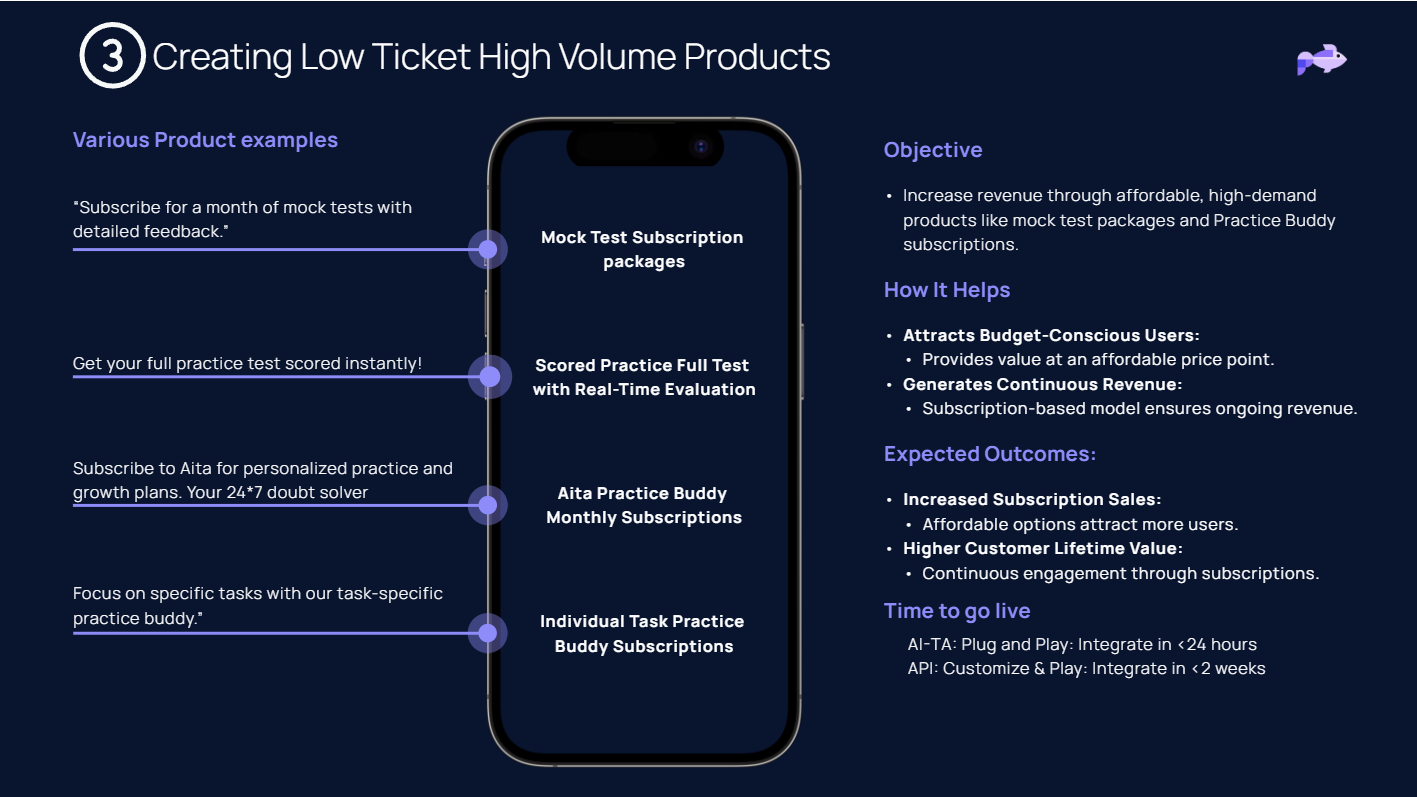
### 3. Create Low Ticket High Volume Products
Offering low-cost, high-volume products allows you to reach a broader audience while maintaining a steady revenue stream. These products are designed to be accessible, providing significant value at an affordable price point, thus attracting a larger customer base. By leveraging our TOEFL APIs, you can deliver high-quality, instantly evaluated products that cater to a wide range of users, enhancing both engagement and satisfaction.
**Expected Outcome**: By offering low-cost, high-volume products, you can significantly expand your customer base, tapping into a broader market segment that values affordability. These accessible products, powered by our TOEFL APIs, will not only drive higher user engagement and satisfaction but also generate a steady and predictable revenue stream. As more users experience the immediate value of these offerings, you can expect increased brand loyalty, higher conversion rates from free to paid services, and an overall boost in long-term customer retention. This strategy will position your platform as an inclusive and versatile solution in the competitive EdTech landscape.
 [Check Out - Create Low Ticket High Volume
Products](https://www.crazygoldfish.com/post/create-low-ticket-high-volume-product)
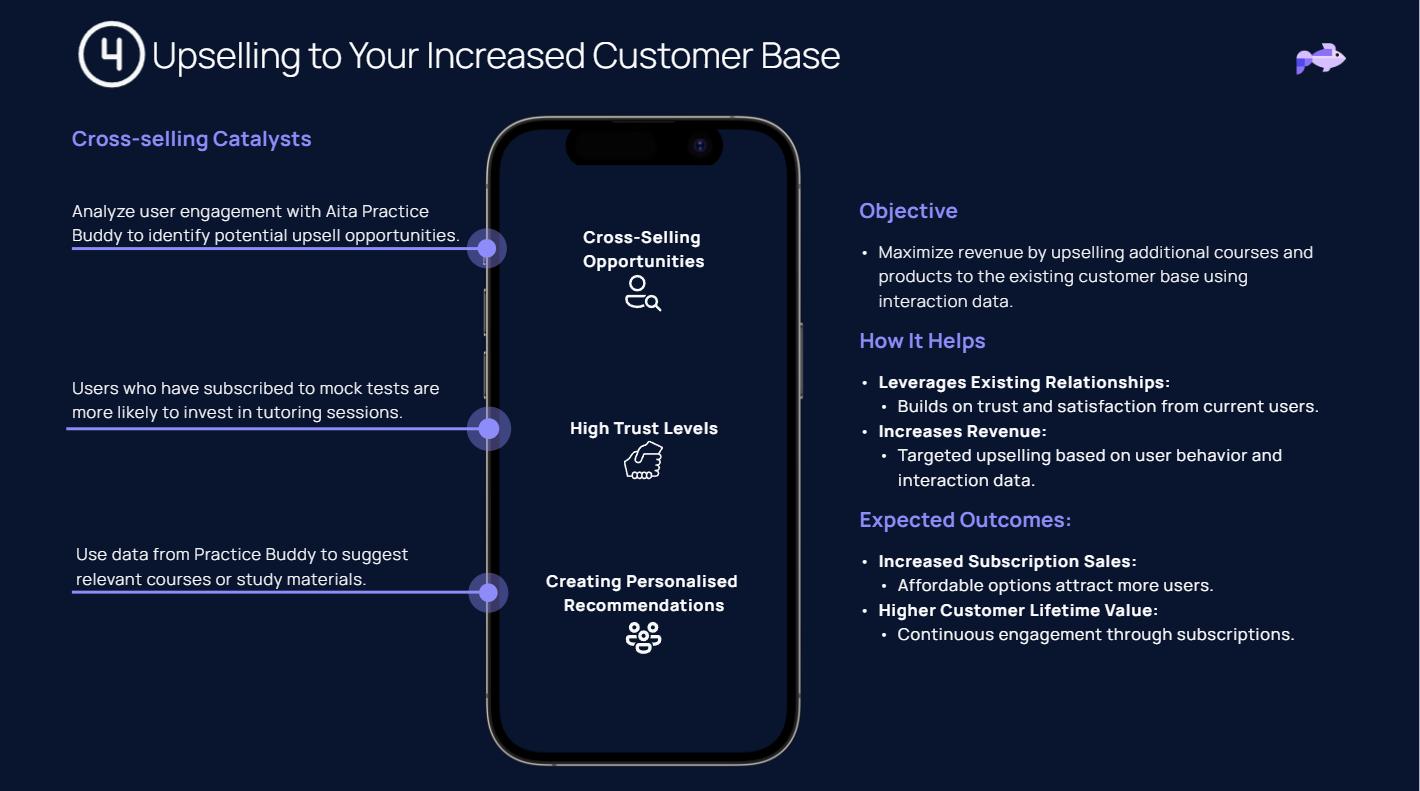
### 4. Upselling to Your Increased Customer Base
Upselling to your existing customer base is a powerful strategy for maximizing revenue. By leveraging interaction data from our APIs, you can identify opportunities to offer additional products and services that align with your users' needs. This not only increases customer lifetime value but also builds on the trust and satisfaction of your current users, making them more likely to invest in premium offerings.
**Expected Outcome**: Implementing an upselling strategy based on user interaction data will lead to higher revenue per user, increased sales of premium products, and stronger customer loyalty. By offering personalized recommendations and targeted upsell opportunities, you can enhance the overall user experience while driving significant revenue growth for your business.
[Check Out - Create Low Ticket High Volume
Products](https://www.crazygoldfish.com/post/create-low-ticket-high-volume-product)
### 4. Upselling to Your Increased Customer Base
Upselling to your existing customer base is a powerful strategy for maximizing revenue. By leveraging interaction data from our APIs, you can identify opportunities to offer additional products and services that align with your users' needs. This not only increases customer lifetime value but also builds on the trust and satisfaction of your current users, making them more likely to invest in premium offerings.
**Expected Outcome**: Implementing an upselling strategy based on user interaction data will lead to higher revenue per user, increased sales of premium products, and stronger customer loyalty. By offering personalized recommendations and targeted upsell opportunities, you can enhance the overall user experience while driving significant revenue growth for your business.
 [Check Out - Upselling to Your Increased Customer
Base](https://www.crazygoldfish.com/post/upselling-to-your-increased-customer-base)
## FAQ
Call the TOEFL endpoint with bearer authentication and the report ID to retrieve a structured payload. The response includes scores, rubric-aligned feedback JSON with explanatory reasoning, and annotated copies you can render in your UI or archive for audits.
The TOEFL Evaluation API handles text, handwriting, audio, and video. Scoring combines rubric/model‑answer grading with objective error detection to produce consistent scores and clear, actionable feedback.
The system proposes rubric‑aligned scores and comments, and educators can approve, edit, or override before publishing annotated copies. This keeps teacher judgment in control while maintaining accuracy targets in high‑stakes contexts.
You can use a white‑label embeddable UI (iframe/secure link) or integrate via REST/JSON APIs. Both approaches use bearer token auth and return structured artifacts—scores, feedback JSON, reasoning, and annotated copies—for your grading or analytics views.
Data handling and reporting are CBSE/ICSE/GDPR aligned, with transparent auditability via annotated copies and dashboards. Role‑based controls and review workflows can be configured to match local policies in regulated environments.
Integration relies on standard backend/frontend skills—bearer‑authenticated REST calls or a drop‑in embeddable UI. The platform manages model performance, evaluation logic, and human‑in‑the‑loop workflows, so your team focuses on UX, data wiring, and governance.
Evaluation results can be routed into Action Plan APIs to generate personalized targets, reteach strategies, and activity packs. Educators can review and adjust these plans while keeping accuracy targets and policy alignment intact.
You receive feedback JSON, annotated copies, and reasoning that can be displayed to learners and teachers or stored for audits. These artifacts support review, parent reporting, and dashboards without building custom grading pipelines.
Treat automated results as provisional and pair programmatic retrieval with human‑in‑the‑loop approval before publishing annotated copies. The Final Results API pattern supports teacher feedback and approval flags for governance and audit trails.
Yes. In addition to TOEFL standards, you can configure custom rubrics so outputs match your program while retaining structured JSON responses and educator oversight.
[Check Out - Upselling to Your Increased Customer
Base](https://www.crazygoldfish.com/post/upselling-to-your-increased-customer-base)
## FAQ
Call the TOEFL endpoint with bearer authentication and the report ID to retrieve a structured payload. The response includes scores, rubric-aligned feedback JSON with explanatory reasoning, and annotated copies you can render in your UI or archive for audits.
The TOEFL Evaluation API handles text, handwriting, audio, and video. Scoring combines rubric/model‑answer grading with objective error detection to produce consistent scores and clear, actionable feedback.
The system proposes rubric‑aligned scores and comments, and educators can approve, edit, or override before publishing annotated copies. This keeps teacher judgment in control while maintaining accuracy targets in high‑stakes contexts.
You can use a white‑label embeddable UI (iframe/secure link) or integrate via REST/JSON APIs. Both approaches use bearer token auth and return structured artifacts—scores, feedback JSON, reasoning, and annotated copies—for your grading or analytics views.
Data handling and reporting are CBSE/ICSE/GDPR aligned, with transparent auditability via annotated copies and dashboards. Role‑based controls and review workflows can be configured to match local policies in regulated environments.
Integration relies on standard backend/frontend skills—bearer‑authenticated REST calls or a drop‑in embeddable UI. The platform manages model performance, evaluation logic, and human‑in‑the‑loop workflows, so your team focuses on UX, data wiring, and governance.
Evaluation results can be routed into Action Plan APIs to generate personalized targets, reteach strategies, and activity packs. Educators can review and adjust these plans while keeping accuracy targets and policy alignment intact.
You receive feedback JSON, annotated copies, and reasoning that can be displayed to learners and teachers or stored for audits. These artifacts support review, parent reporting, and dashboards without building custom grading pipelines.
Treat automated results as provisional and pair programmatic retrieval with human‑in‑the‑loop approval before publishing annotated copies. The Final Results API pattern supports teacher feedback and approval flags for governance and audit trails.
Yes. In addition to TOEFL standards, you can configure custom rubrics so outputs match your program while retaining structured JSON responses and educator oversight.